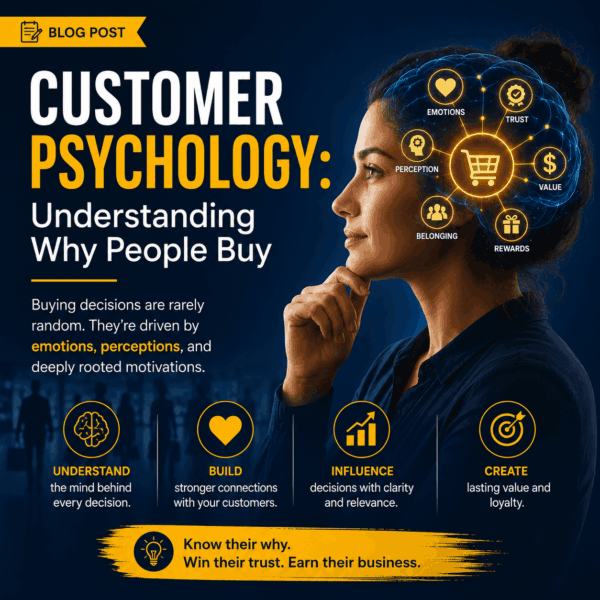
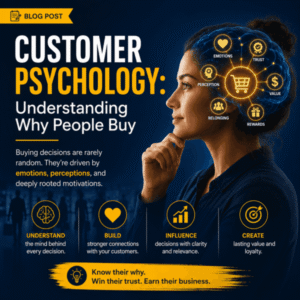
Understanding why people buy is essential for any business owner.
Why do people buy?
It sounds like a simple question.
However, the answer is much more complicated than simply saying, “Because they need the product.”
People buy because of emotions.
They buy because something solves a problem.
They buy because something makes their life easier.
They buy because they want to feel better, look better, save time, avoid a problem, impress someone, or experience something new.
In other words, people rarely buy based on logic alone.
Instead, emotions often get their attention first. Then, logic helps them justify the decision.
Understanding this is one of the most valuable things a business owner can learn.
Because once you understand why people buy, you can create better marketing, better displays, better offers, and better customer experiences.
So, let’s look at the psychology behind purchasing decisions and how you can use it to help your business attract more customers.
1. People Buy Solutions, Not Products
One of the most important principles in customer psychology is this:
People don’t really buy products. They buy solutions.
For example, a customer doesn’t necessarily want a drill.
They want a hole.
Someone doesn’t necessarily want a gym membership.
They may want to become healthier, stronger, or more confident.
Likewise, someone doesn’t necessarily want a new smartphone.
They may want convenience, entertainment, better photography, or a way to stay connected.
Therefore, when you’re marketing your business, don’t focus only on what your product is.
Instead, explain what your product does for the customer.
Instead of:
“We sell high-quality running shoes.”
Try:
“Run farther with shoes designed for all-day comfort.”
The first statement describes the product.
The second describes the benefit.
And benefits are much easier for customers to connect with.
Try It
Take one of your best-selling products.
Then ask:
“What problem does this solve?”
Next, ask:
“How does the customer feel after that problem is solved?”
Those answers can become powerful marketing messages.
2. Emotion Usually Comes First
Customers like to believe they’re completely rational when they buy something.
However, purchasing decisions are often influenced by emotion.
Think about the last time you bought something you really wanted.
You probably didn’t create a spreadsheet comparing every possible option.
Instead, something about the product caught your attention.
Maybe you loved the way it looked.
Maybe it made you excited.
Maybe you imagined yourself using it.
Maybe it reminded you of something.
First came the feeling. Then came the justification.
For example:
A customer sees a beautiful piece of furniture.
They immediately imagine it in their home.
They picture their friends seeing it.
They imagine how much better the room will look.
Then they start thinking about price, quality, and other practical details.
The emotion creates desire.
The logic helps justify the purchase.
This Is Why Presentation Matters
The same product can feel completely different depending on how it’s presented.
A product sitting on a cluttered shelf may seem ordinary.
The exact same product displayed beautifully, properly lit, and surrounded by compelling information can suddenly feel special.
Consequently, presentation isn’t just decoration. It’s part of the sales process.
3. Attention Comes Before Persuasion
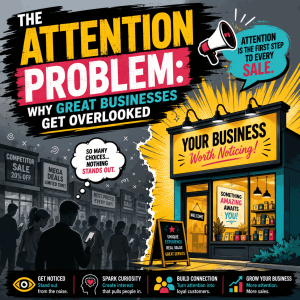
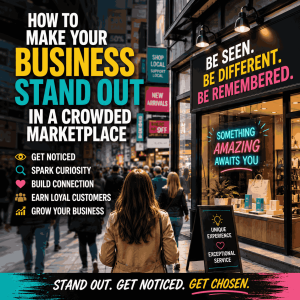
Before you can convince someone to buy something, you have to get their attention.
This sounds obvious.
Yet businesses often overlook it.
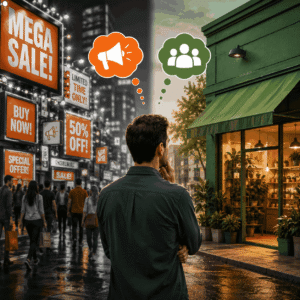
Think about how many advertisements, signs, storefronts, websites, and messages people encounter every day.
Customers have learned to filter out things that don’t immediately seem relevant.
As a result, your first job isn’t necessarily to sell.
Your first job is to get noticed.
Only after someone notices you can you begin creating interest.
Then comes curiosity.
Then consideration.
And eventually, the purchase decision.
Think of the process like this:
Attention → Interest → Desire → Action
If you don’t capture attention, the rest of the process never gets started.
That’s why your storefront, website, advertising, packaging, and displays matter so much.
They are often the first step in the customer’s psychological journey.
4. People Are Drawn To What Is New
Humans naturally pay attention to things that are new, unusual, or unexpected.
That’s one reason businesses constantly promote:
NEW!
JUST ARRIVED!
LIMITED EDITION!
COMING SOON!
New things create curiosity.
Even existing customers may pay attention to something simply because it has changed.
For Example
Imagine you walk past the same store every day.
You barely notice it anymore.
Then one morning, there’s a completely new display in the window.
You look.
Why?
Because something changed.
That change interrupted your normal pattern.
Businesses can use this principle by regularly changing displays, featured products, window presentations, promotions, and visual content.
Try It
If your storefront has looked the same for months, change something.
Move a display.
Feature a different product.
Add a new message.
Create a seasonal presentation.
Give regular customers a reason to look again.
5. Curiosity Makes People Investigate
Curiosity is another powerful psychological trigger.
When people see something they don’t completely understand, they often want to know more.
For example, imagine walking past a store and seeing a sign that says:
“Something New Is Coming Friday.”
You don’t know what it is.
That’s exactly why you want to know.
The information gap creates curiosity.
Businesses Can Use This
Instead of telling customers everything immediately, sometimes give them a reason to discover the answer.
For example:
“Can You Guess What’s Inside?”
“Have You Seen This Before?”
“What Do You Think This Does?”
“Something Big Is Coming.”
These messages create questions.
And questions can create attention.
More importantly, curiosity can turn passive observers into active participants.
6. People Fear Missing Out
Another powerful psychological factor is FOMO—fear of missing out.
People don’t want to miss an opportunity that other people are taking advantage of.
That’s why phrases like these can be effective:
- Limited time
- While supplies last
- Today only
- Last chance
- New release
- Exclusive
- Members only
- Limited edition
However, urgency should be genuine.
Don’t manufacture fake scarcity.
Instead, use real limitations when they exist.
For example, if you genuinely have only 25 units available, tell customers.
If a promotion really ends Friday, tell them.
If an event really happens only once, make that clear.
Why It Works
Without urgency, customers can always tell themselves:
“I’ll come back later.”
Unfortunately, later often never comes.
Therefore, a legitimate reason to act now can help customers move from interest to action.
7. People Trust Other People
Customers don’t only evaluate what you say about your business.
They also pay attention to what other people say about you.
This is called social proof.
Reviews.
Testimonials.
Customer photos.
Ratings.
Recommendations.
User-generated content.
All of these can reduce uncertainty.
For example, imagine you’re choosing between two restaurants.
Restaurant A has 4.8 stars and hundreds of recent reviews.
Restaurant B has very few reviews.
Even if you know nothing else about either restaurant, you’re probably going to feel more comfortable choosing the one with stronger social proof.
Why?
Because other people’s experiences give you information you don’t have yourself.
Businesses Can Use Social Proof
Consider displaying:
“★★★★★ CUSTOMER FAVORITE”
Or:
“OVER 1,000 CUSTOMERS SERVED”
Or:
“MOST POPULAR”
Of course, only use claims that are true.
Authentic social proof builds confidence.
8. People Want To Feel Understood
Customers don’t want to feel like a number.
They want to feel understood.
They want to believe that your business understands their needs, frustrations, goals, and preferences.
That’s why good marketing often sounds like a conversation.
For example:
Weak:
“Our software provides advanced business management solutions.”
Stronger:
“Still spending hours every week trying to keep everything organized?”
The second message starts with the customer’s problem.
Consequently, the customer may think:
“Yes. That’s exactly what I’m dealing with.”
And once someone feels understood, they’re more likely to continue listening.
Try It
Instead of starting your marketing by talking about your company, start by describing your customer’s problem.
Make them recognize themselves in your message.
9. People Want To Know What’s In It For Them
Customers are naturally asking one question:
“What’s in it for me?”
Your business may be proud of how long you’ve been operating.
You may have an impressive facility.
You may use advanced technology.
You may have a large team.
Those things can matter.
However, customers ultimately want to know how those things benefit them.
For example:
Instead of:
“We’ve been serving customers for 25 years.”
You could say:
“25 years of experience helping customers find the right solution.”
The difference is subtle.
But now the company’s experience is connected to the customer’s benefit.
That’s much more persuasive.
10. People Don’t Want To Make The Wrong Decision
Purchasing something involves risk.
Even a relatively small purchase can create uncertainty.
Customers may wonder:
“Will this work?”
“Is it worth the money?”
“What if I don’t like it?”
“Can I trust this company?”
“What if there’s a better option?”
The more expensive or important the purchase, the more significant these concerns can become.
Therefore, businesses should reduce uncertainty whenever possible.
You can do this with:
- Clear product information
- Demonstrations
- Reviews
- Guarantees
- Warranties
- Easy returns
- Transparent pricing
- Helpful customer service
- Frequently asked questions
The easier you make the decision, the easier it becomes for customers to say yes.
11. People Respond To Simplicity
Too many choices can create confusion.
Imagine walking into a restaurant with 300 menu items.
At first, that might sound great.
However, you might spend ten minutes trying to decide what to order.
More choices don’t always create more sales.
Sometimes they create decision fatigue.
Therefore, businesses can simplify the buying process by highlighting:
BEST SELLER
MOST POPULAR
OUR PICK
GOOD / BETTER / BEST
START HERE
These simple guides help customers make decisions.
Try It
Look at your product selection.
Is there an obvious place for a new customer to start?
If not, create one.
Help people decide instead of making them figure everything out themselves.
12. People Remember Experiences
Finally, people don’t always remember advertisements.
They remember experiences.
Think about the businesses you’ve talked about with friends.
You probably don’t say:
“Their advertising was really effective.”
Instead, you say:
“You have to see this place.”
Or:
“They did something really cool.”
Or:
“The experience was incredible.”
That’s because memorable experiences create emotional connections.
And those connections can make customers more likely to return, recommend your business, and share their experience with others.
This Is Where Attention Becomes Powerful
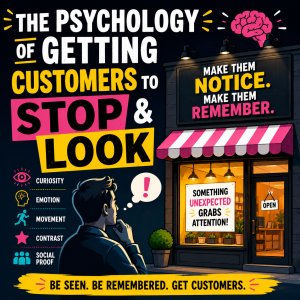
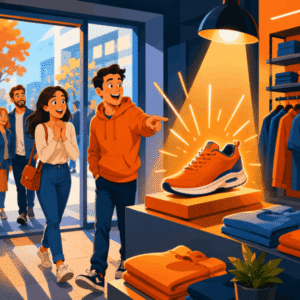
Consider a customer walking past a storefront.
Normally, they might keep walking.
However, something unusual catches their eye.
They stop.
They become curious.
They walk closer.
They see your product.
Someone from your team starts a conversation.
Suddenly, you’ve created an experience.
And that experience started with attention.
How Customer Psychology Applies To Your Business
Understanding psychology doesn’t mean manipulating customers.
Instead, it means understanding what your customers actually need in order to make confident decisions.
Think about the customer journey:
1. ATTENTION
First, get noticed.
2. CURIOSITY
Next, give people a reason to learn more.
3. INTEREST
Then, show them something relevant.
4. TRUST
After that, reduce their uncertainty.
5. DESIRE
Show them how the product improves their situation.
6. ACTION
Finally, make it easy for them to buy.
This process can apply to almost any business.
Whether you’re selling clothing, food, technology, services, jewelry, fitness programs, home products, or something else, the underlying psychology is surprisingly similar.
How Biz Attention Uses Customer Psychology
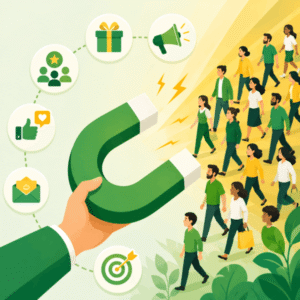
At Biz Attention, we believe that getting attention is the first step in the customer journey.
That’s why attention-grabbing displays can be useful for businesses.
A holographic display isn’t simply something interesting to look at.
Used correctly, it can help create the first psychological trigger: attention.
A moving 3D visual can make someone look.
That visual can create curiosity.
Curiosity can encourage someone to move closer.
Once they’re closer, your product becomes easier to see.
Then, your team can start a conversation.
In other words:
Attention → Curiosity → Interest → Conversation → Opportunity
The technology is simply the tool.
The psychology is what makes the strategy work.
The Bottom Line: People Buy For Reasons That Go Beyond Price
Price matters.
Quality matters.
Features matter.
However, purchasing decisions are influenced by much more than those things.
People buy because they want solutions.
They buy because they feel something.
They buy because they trust you.
They buy because other people recommend you.
They buy because they don’t want to miss an opportunity.
They buy because they understand the benefit.
And, often, they buy because something captured their attention in the first place.
So, when you’re marketing your business, don’t simply ask:
“What am I selling?”
Instead, ask:
“Why would my customer want this?”
Then ask:
“What would make them notice it?”
Next:
“What would make them curious?”
And finally:
“What would make them feel confident enough to buy?”
Those questions can completely change the way you approach marketing.
Because ultimately, successful marketing isn’t just about putting your product in front of people.
It’s about understanding the people you’re trying to reach.
And once you understand why people buy, you can create better messages, better displays, better experiences, and ultimately, better opportunities to turn attention into customers.
Ready To Get More Attention For Your Business?
At Biz Attention, our mission is simple:
Helping Businesses Get Attention.
Because before someone can become a customer, they have to notice you.
And in a world filled with advertisements, signs, screens, products, and distractions, getting noticed has never been more important.
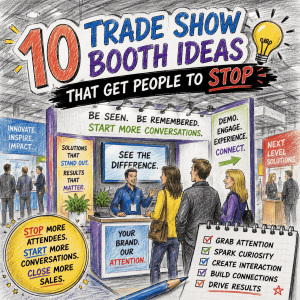
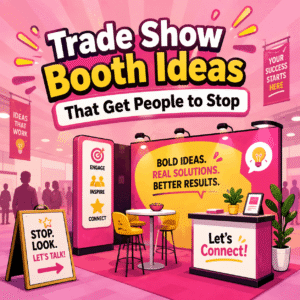
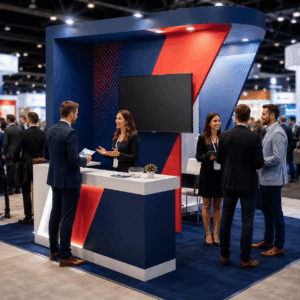
Whether you’re trying to attract people into your storefront, make products stand out, create a memorable trade show booth, or give customers an experience they haven’t seen before, the right visual strategy can help you get noticed.
First, make them look.
Then, make them curious.
Finally, give them a reason to remember you.
Explore Biz Attention’s attention-grabbing displays → bizattention.com
Biz Attention — Helping Businesses Get Attention.
👉 Ready to give your customers something they’ll remember? Explore Biz Attention’s holographic displays and find the right display for your business.
Click here to see our products.









Leave a Reply