
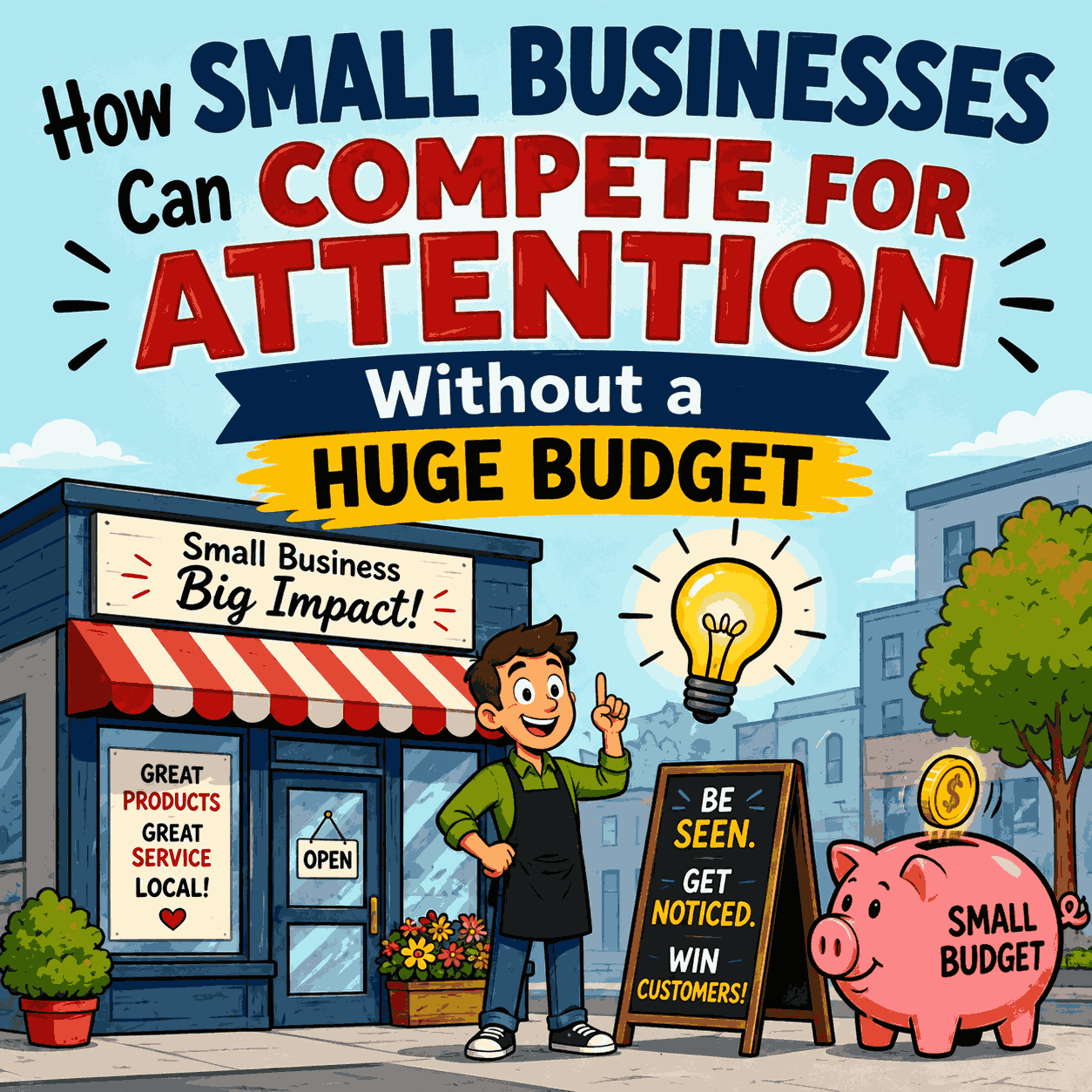
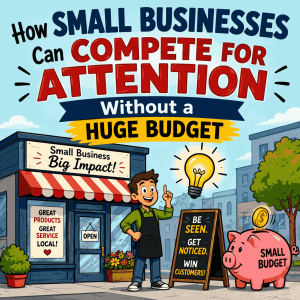
How Small Businesses Can Compete for Attention Without a Huge
Budget
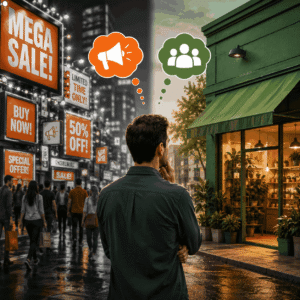
Big companies have something small businesses usually don’t: big marketing budgets.
They can buy more ads. They can rent giant billboards. They can hire agencies, influencers, photographers, designers, and entire marketing departments.
But here’s the good news:
You don’t have to outspend a big company to outsmart one.
In fact, small businesses have advantages that large corporations often struggle to duplicate. You can be more personal, more creative, more flexible, and sometimes a whole lot more interesting.
If you’re trying to compete for attention without a huge budget, the goal isn’t to advertise everywhere.
The goal is to make the attention you do get count.
How to Compete for Attention Without a Huge Budget
First, forget the idea that marketing success is simply about spending more money.
More advertising doesn’t automatically mean more attention.
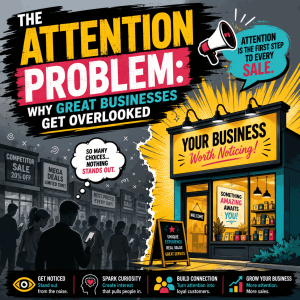
Think about how many advertisements you see every day and completely ignore.
Probably hundreds.
Now think about something unusual you saw recently that made you stop and look.
That’s the difference.
Small businesses don’t necessarily need more exposure. They need to become more noticeable.
Instead of asking:
“How can I afford more advertising?”
Try asking:
“How can I make more people notice the advertising and promotions I’m already doing?”
That’s a completely different approach.
1. Stop Trying to Look Like the Big Guys
It’s tempting to look at larger competitors and copy what they’re doing.
But there’s a problem.
They have more money to do it.
Instead, use your size to your advantage.
A small business can have:
- More personality
- More humor
- More creativity
- More flexibility
- More personal customer service
- More interesting promotions
- A stronger connection with the local community
You don’t have to sound like a corporation.
Actually, you probably shouldn’t.
People like doing business with people.
Let your personality show.
2. Compete for Attention Without a Huge Budget by Being
Unexpected
One of the easiest ways to get ignored is to be predictable.
If customers have seen the same type of sign 500 times, they’re probably not going to suddenly notice yours on attempt 501.
Do something they aren’t expecting.
That could mean:
- A funny sign outside your store
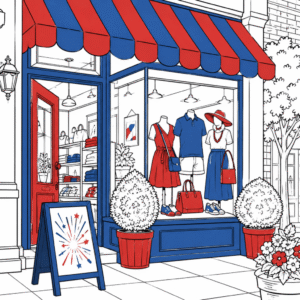
- An unusual window display
- An unexpected product demonstration
- A clever social media video
- A creative sidewalk sign
- An interactive display
- An interesting contest
- A surprising special offer
You don’t necessarily need something expensive.
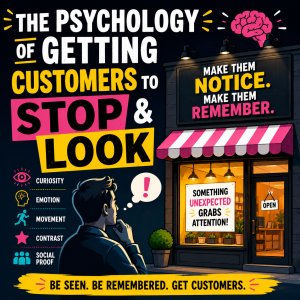
You need something that makes people think:
“Wait…what’s that?”
That tiny moment of curiosity can be extremely valuable.
3. Give People a Reason to Stop
Foot traffic doesn’t automatically become store traffic.
People can walk past your business all day without ever noticing what’s inside.
That’s why your storefront should give people a reason to pause.
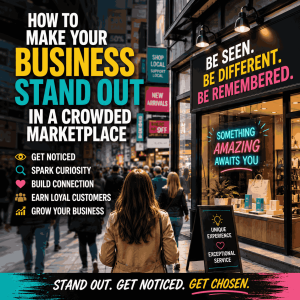
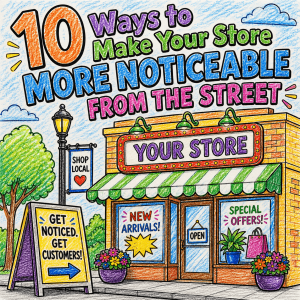
Walk outside and look at your business from across the street.
Then ask yourself:
- What catches my eye first?
- Can I quickly tell what this business sells?
- Is there anything interesting happening?
- Are my best promotions easy to see?
- Does anything make me curious?
- Would I stop if I’d never been here before?
If the answer to that last question is no, you’ve just found an opportunity.
4. Focus Attention on What Makes You Money
Not every product deserves equal attention.
If you’re a retailer, you probably have certain products that are:
- More profitable
- New
- Seasonal
- Frequently purchased
- Great impulse buys
- Unique to your store
Yet many businesses give their best products the same amount of visual attention as everything else.
Don’t let high-profit products disappear into a sea of merchandise.
Give them a spotlight.
Create a special display.
Move them somewhere unexpected.
Add signage.
Demonstrate them.
Make them the star of the show.
When you’re trying to compete for attention without a huge budget, sometimes the smartest move isn’t attracting more customers.
It’s getting your existing customers to notice more of what you already sell.
5. Use Curiosity Instead of Constantly Selling
Small business marketing doesn’t always have to scream:
BUY THIS!
Sometimes curiosity works better.
For example, compare these two signs:
“20% OFF TODAY!”
versus:
“Want to See What Everyone Keeps Asking Us About?”
Which one makes you curious?
You can use curiosity in:
- Storefront signs
- Window displays
- Social media posts
- Videos
- Emails
- Product displays
- Trade show booths
- Advertising
Give people enough information to become interested—but sometimes leave a little mystery.
Curiosity makes people want to know what comes next.
6. Turn Your Customers Into Your Marketing Department
One of the best forms of advertising doesn’t require you to buy an ad at all.
It’s people talking about your business.
Give customers something worth talking about.
It could be:
- An amazing customer experience
- A surprising display
- A funny promotion
- Exceptional service
- An unusual product
- A photo opportunity
- A memorable giveaway
- Something people want to share online
Ask yourself:
“What could we do that might make a customer pull out their phone and take a picture?”
That’s a powerful question.
Because when customers start sharing your business, your marketing can reach people you never paid to reach.
7. Use Social Media Like a Small Business
You don’t need a Hollywood production studio to create good social media content.
In many cases, polished corporate-looking videos can actually feel less personal.
Your phone is enough.
Show people what’s happening inside your business.
Try simple content such as:
- New products arriving
- Before-and-after displays
- Customer favorites
- Behind-the-scenes moments
- Quick tips
- Funny moments
- Employee introductions
- Product demonstrations
- Common customer questions
- “Did you know?” videos
And don’t make every post an advertisement.
Teach. Entertain. Help. Then sell.
Give people a reason to follow you even when they aren’t ready to buy something.
8. Compete for Attention Without a Huge Budget With Better Signs
Signs are incredibly simple—and incredibly easy to get wrong.
A sign shouldn’t require someone to stop and read three paragraphs.
People are moving.
You may only have a few seconds.
Keep your message simple.
Instead of:
“Come inside today and take advantage of our incredible selection of products at competitive prices.”
Try:
“YOU NEED TO SEE THIS.”
Or:
“TODAY ONLY.”
Or:
“OUR #1 BESTSELLER.”
Or:
“NEW!”
The job of the first message isn’t necessarily to make the entire sale.
Sometimes its only job is to get the next few seconds of attention.
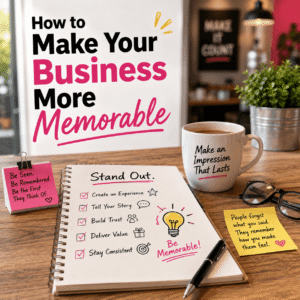
9. Make Your Business Memorable
Getting noticed is important.
Getting remembered is even better.
Imagine two businesses selling essentially the same product.
One gives you an ordinary experience.
The other gives you an experience you tell your spouse about when you get home.
Which business are you more likely to remember?
Exactly.
Being memorable doesn’t have to cost a fortune.
It can come from:
- How customers are greeted
- Your business personality
- Your packaging
- Your displays
- Your sense of humor
- How you solve problems
- Your follow-up
- A small unexpected extra
- How customers feel when they’re there
People might forget exactly what you said.
But they’ll often remember how your business made them feel.
10. Invest in Things That Keep Getting Attention
When you do spend marketing money, think about how long that investment will work for you.
An advertisement disappears when you stop paying for it.
But some marketing investments can keep working.
For example, you might invest in:
- Better storefront signage
- Reusable displays
- Video content
- Attention-getting product displays
- Improved lighting
- Customer photo opportunities
- Email marketing
- Creative visual technology
- Reusable trade show materials
Instead of only asking:
“How much does this cost?”
Also ask:
“How many times can I use it?”
Something that costs more initially but attracts attention for years could ultimately be far less expensive than constantly paying for temporary advertising.
Your Small Business Has an Advantage
There’s something big businesses often spend millions of dollars trying to create.
Personality.
You already have it.
You’re closer to your customers.
You can react faster.
You can try something Monday, change it Wednesday, and try something completely different Friday.
A giant corporation may need meetings, approvals, committees, research, and another meeting to discuss the previous meeting.
You can simply say:
“Let’s try it.”
Use that advantage.
You Don’t Need Everyone’s Attention
Here’s another important point.
You don’t need everyone in town to notice your business.
You need the right people to notice it.
If 10,000 people see your advertisement but none of them need what you sell, that attention isn’t worth much.
However, if 100 potential customers stop and become genuinely interested, that’s a completely different story.
When you compete for attention without a huge budget, focus on attracting people who are most likely to become customers.
Better attention beats more attention.
Start With One Attention Experiment This Week
Don’t finish reading this article and create a giant marketing to-do list.
Pick one thing.
This week, try changing one part of your business designed specifically to get more attention.
For example:
- Rewrite your sidewalk sign.
- Feature one high-margin product.
- Create an unusual window display.
- Post a helpful 30-second video.
- Try a curiosity-based headline.
- Create something customers might photograph.
- Change what people see first when they enter your business.
Then watch what happens.
Do more people stop?
Do customers ask questions?
Does a product suddenly start selling?
Do people interact with your post?
Pay attention to what gets attention.
Then do more of it.
Competing for Attention Isn’t About Who Has the Most Money
A bigger advertising budget certainly helps.
But money isn’t the only thing that gets attention.
Creativity gets attention.
Curiosity gets attention.
Personality gets attention.
Something unexpected gets attention.
And that’s why a small business absolutely can compete for attention without a huge budget.
You don’t have to shout louder than the giant company down the street.
You just need to give your customers a better reason to look.
Ready to Get Your Business Noticed?
At Biz Attention, we’re focused on helping businesses solve one of the most important problems in marketing:
Getting noticed in the first place.
From creative marketing ideas and attention strategies to eye-catching visual display solutions, our goal is to help small businesses turn passing glances into curiosity—and curiosity into customers.
Because you shouldn’t need a Fortune 500 advertising budget to get attention.
You just need to stop blending in.
👉 Discover how Biz Attention can help you attract more attention, showcase your products, and become the business customers remember.















Leave a Reply