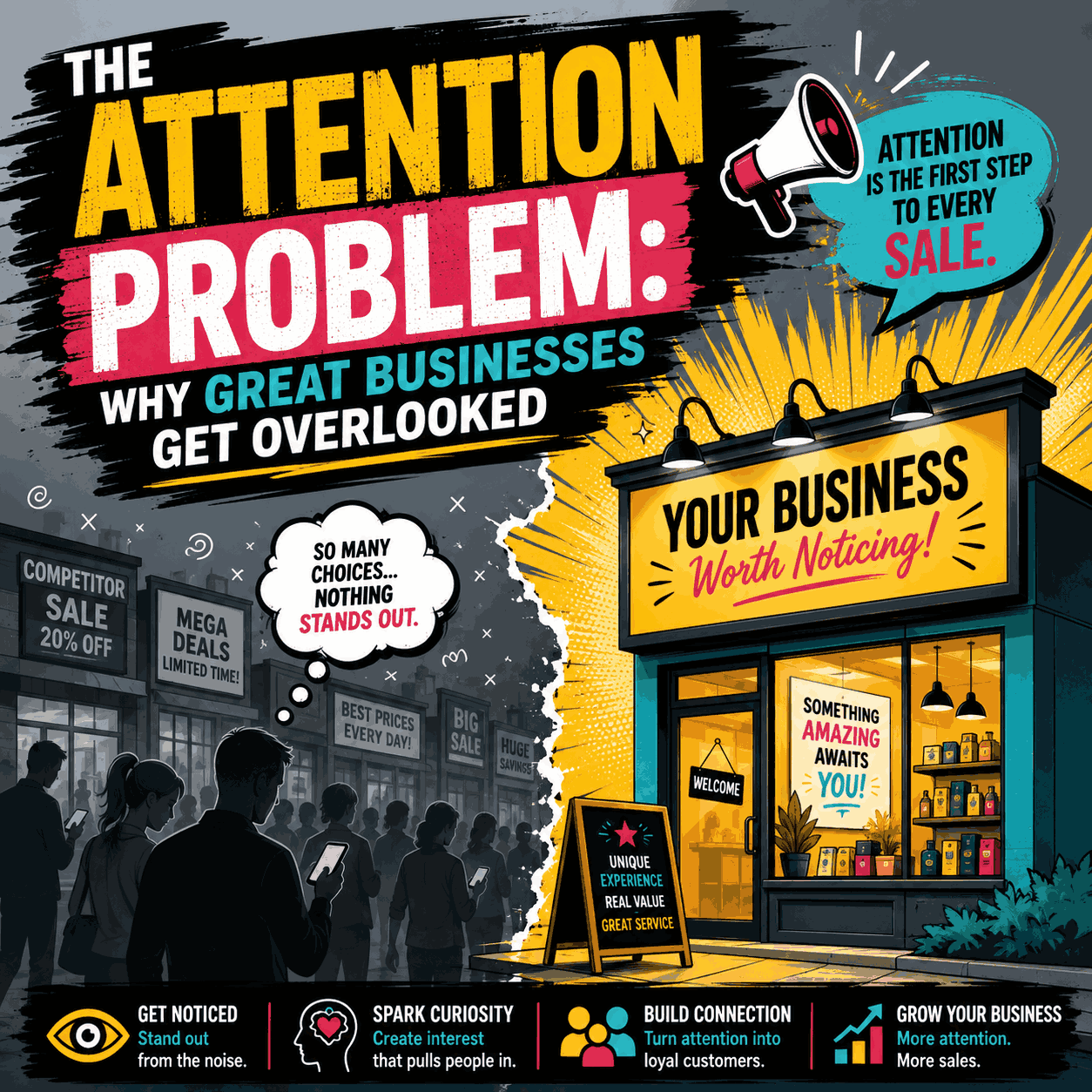
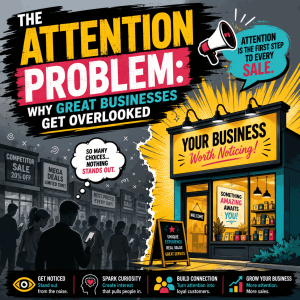
The Attention Problem: Why Great Businesses Get Overlooked
You can have a fantastic product.
You can provide amazing customer service.
You can offer competitive prices.
You can have years of experience and hundreds of happy customers.
And still watch potential customers walk right past you.
That’s frustrating. However, it’s also one of the most misunderstood problems in small-business marketing.
Business owners naturally assume that if they provide something great, people will eventually discover them.
Unfortunately, customers can’t choose a business they don’t notice.
And that’s the attention problem.
In fact, understanding why great businesses get overlooked can completely change the way you think about marketing.
Instead of constantly asking:
“How can I sell more?”
Start by asking:
“Are enough people noticing us in the first place?”
Because sometimes you don’t have a sales problem.
You have an attention problem.
Why Great Businesses Get Overlooked in a Busy World
Think about everything competing for your attention today.
Before breakfast, you may have already seen:
- Text messages
- Emails
- Social media posts
- News headlines
- Advertisements
- Videos
- App notifications
- Television
- Signs
- Billboards
Then you leave the house and the competition for your attention continues.
Everywhere you look, somebody wants you to notice something.
Naturally, your brain can’t pay attention to all of it.
So, it does something very useful:
It ignores most of it.
Unfortunately for business owners, your store, sign, advertisement, promotion, or product display might be one of the things getting ignored.
Not because it’s bad.
Not because people aren’t interested.
And not because your prices are too high.
They simply didn’t notice it.
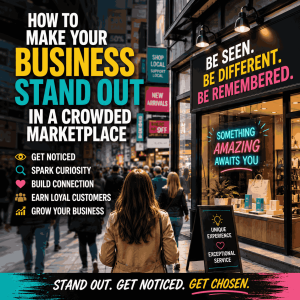
Being Visible Isn’t the Same as Being Noticed
This is an important distinction.
Your business can be visible without actually getting attention.
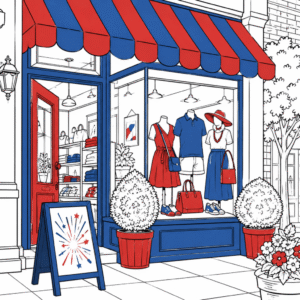
For example, imagine a customer walking past a storefront.
The sign is there.
The window display is there.
The promotion is there.
The customer technically saw all of it.
However, none of it registered strongly enough to make them stop.
That’s the difference between being seen and being noticed.
The same thing happens with:
- Products on shelves
- Restaurant specials
- Dealership promotions
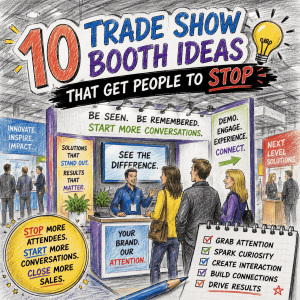
- Trade show booths
- Salon services
- Social media posts
- Online advertisements
- Email promotions
Simply putting something in front of people doesn’t guarantee they’ll pay attention to it.
Therefore, if you’re trying to understand why great businesses get overlooked, this is a good place to start.
Your Customers Aren’t Trying to Ignore You
Here’s something that might make you feel a little better.
Most potential customers aren’t deliberately ignoring your business.
They’re busy.
They’re distracted.
They’re thinking about work.
They’re looking at their phones.
They’re trying to remember what they need at the grocery store.
They’re talking to someone.
They’re thinking about dinner.
They’re wondering why the person in front of them is driving 12 miles per hour under the speed limit.
In other words, your business isn’t the center of their world.
And that’s okay.
However, it means your marketing has to work a little harder to interrupt their normal pattern of attention.
Why Great Businesses Get Overlooked When They Blend In
Imagine a row of ten businesses.
They all have similar storefronts.
They all have similar signs.
They all use similar advertising.
They all have similar window displays.
Now imagine one business looks noticeably different.
Which one are you likely to look at?
Probably the different one.
That’s because our attention naturally responds to contrast and change.
Unfortunately, many businesses do the opposite.
They look at competitors and think:
“We should do what they’re doing.”
That makes sense to a point.
However, if you copy everything your competitors do, eventually you start looking exactly like them.
And then customers have another problem:
There’s no obvious reason to notice you.
The “Sea of Sameness” Problem
This happens in almost every industry.
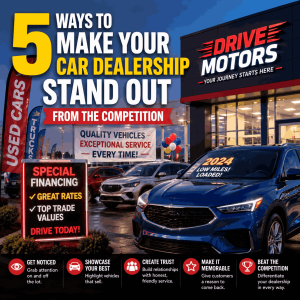
Drive down a street filled with car dealerships and you’ll see similar:
- Flags
- Signs
- Banners
- Vehicle layouts
- Promotions
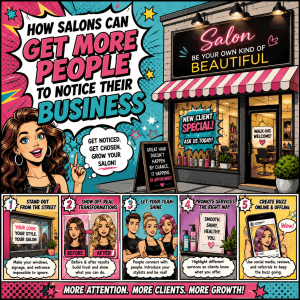
Visit several salons and you’ll often see similar:
- Décor
- Service menus
- Social posts
- Promotions
Walk through a trade show and you’ll see booth after booth with:
- Banners
- Tables
- Brochures
- Television screens
- Giveaways
Eventually, everything starts blending together.
That’s what I call the sea of sameness.
And if your business is floating around in that sea, simply doing more of the same thing may not solve the problem.
Instead, you need to give people a reason to look in your direction.
Great Products Get Overlooked Too
The attention problem doesn’t stop at your front door.
It continues inside your business.
For example, a retailer may have a fantastic high-margin product sitting on a shelf.
However, it’s surrounded by 50 other products.
So customers walk past it.
Day after day.
Then one regular customer finally notices it and says:
“When did you start carrying these?”
And you answer:
“About eight months ago.”
That’s the attention problem in action.
The product was there.
The customer was there.
The opportunity was there.
Attention wasn’t.
Give Important Products More Attention
If you have products or services you especially want customers to notice, don’t leave discovery entirely to chance.
Highlight things such as:
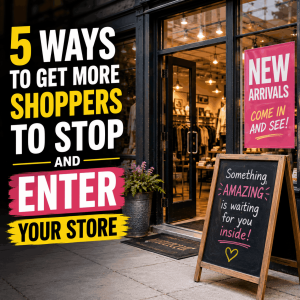
- New arrivals
- High-margin products
- Customer favorites
- Seasonal items
- Signature services
- Limited-time specials
- Unique products
- Products customers frequently overlook
Then consider giving those items:
- Better positioning
- More visual separation
- Better lighting
- Clearer signage
- A dedicated display
- A demonstration
- More movement or visual interest
Sometimes you don’t need more products.
You need more attention on the right products.
More Advertising Doesn’t Automatically Fix the Attention Problem
This is where things get interesting.
When businesses aren’t getting enough customers, the natural response is often:
“We need more advertising.”
So, they spend more money.
However, what happens if the advertising itself isn’t getting noticed?
Now you’re simply paying to be ignored by more people.
That’s why more exposure isn’t always the same thing as more effective marketing.
Before increasing your advertising budget, ask:
- Is the message noticeable?
- Is it easy to understand?
- Does it create curiosity?
- Does it look different from competing messages?
- Is there one obvious thing to focus on?
- Does it give someone a reason to keep looking?
If not, consider improving the message before buying more exposure.
Why Great Businesses Get Overlooked When They Say Too Much
Business owners know a lot about their businesses.
Naturally, they want customers to know all of it.
So, they create a sign that says:
FAMILY OWNED • GREAT SERVICE • LOW PRICES • HUGE SELECTION • FREE ESTIMATES • 20 YEARS EXPERIENCE • CALL TODAY • OPEN SATURDAY • ASK ABOUT OUR SPECIAL!
That’s a lot.
Unfortunately, the person driving past doesn’t have three minutes to study your sign.
They might have three seconds.
Therefore, simplicity matters.
Pick One Message
Instead of communicating everything at once, ask:
“What’s the most important thing I want this person to notice?”
Then start there.
For example:
NEW ARRIVALS
TODAY’S SPECIAL
YOU NEED TO SEE THIS
OUR #1 BESTSELLER
NOW OPEN
FREE ESTIMATES
Once you’ve earned their attention, you can provide more information.
But first, earn the attention.
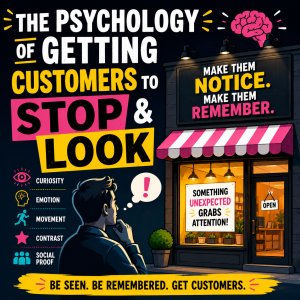
Curiosity Can Help Solve the Attention Problem
People naturally want answers to questions.
Therefore, curiosity can be one of the simplest ways to get someone to pay attention.
For example, compare:
“New Product Available.”
with:
“Why Does Everyone Keep Asking About This?”
The second creates an unanswered question.
Similarly, you might try:
- “Have You Seen This Yet?”
- “Guess What Just Arrived.”
- “There’s a Reason People Keep Looking.”
- “Our Customers Didn’t Expect This.”
- “What Would You Do With This?”
- “This Might Surprise You.”
Of course, don’t turn everything into clickbait.
Instead, use curiosity when there’s actually something interesting to discover.
Movement Can Break Through the Clutter
Our eyes naturally notice movement.
Something moving in your peripheral vision often causes you to look without even thinking about it.
Therefore, movement can help businesses attract attention in visually crowded environments.
Depending on your business, that might include:
- Video
- Digital signage
- Changing displays
- Product demonstrations
- Animated content
- Interactive displays
- 3D visual displays
However, there’s an important rule:
Movement should direct attention, not create chaos.
The goal isn’t to make everything flash.
Instead, use movement to guide someone’s eyes toward the message, product, or promotion that matters.
Sometimes Less Gets More Attention
Here’s the strange thing about attention:
Sometimes adding more makes you less noticeable.
Imagine a wall covered with 50 posters.
Now imagine that same wall with one poster.
Which poster gets more attention?
Probably the single one.
Therefore, when something important is getting overlooked, don’t automatically add more.
Try removing distractions.
Create space around it.
Make the message bigger.
Simplify the presentation.
In other words:
Don’t just make the important thing louder. Make everything around it quieter.
Give People Something Worth Remembering
Attention gets someone to look.
However, memory helps them come back.
That’s why your business shouldn’t only ask:
“How do we get noticed?”
You should also ask:
“What will people remember about us?”
Perhaps it’s:
- Exceptional customer service
- A funny sign
- An unusual display
- A signature product
- A memorable employee
- Beautiful packaging
- A surprising experience
- A unique demonstration
- A personal touch
Sometimes small details create the biggest memories.
The 5-Second Attention Test
Here’s a simple experiment you can try today.
Look at your:
- Storefront
- Website homepage
- Main product display
- Current advertisement
- Trade show booth
- Restaurant entrance
- Showroom
- Social media profile
Give yourself five seconds.
Then look away.
Ask yourself:
- What did I notice first?
- What do I remember?
- Was the most important message obvious?
- Did anything make me curious?
- Was there too much information?
- Would I want to look again?
Better yet, find someone who doesn’t know much about your business.
Show them the same thing for five seconds.
Then ask:
“What did you notice?”
Don’t explain what they were supposed to notice.
Just listen.
Their answer could be incredibly useful.
Don’t Confuse Attention With Annoyance
There’s another side to this.
You can definitely get attention by being obnoxious.
However, that’s probably not the kind of attention you want.
Good attention creates:
- Curiosity
- Interest
- Surprise
- Excitement
- Engagement
- Conversation
Bad attention creates:
- Irritation
- Confusion
- Distrust
- Discomfort
Therefore, the goal isn’t simply:
“MAKE EVERYONE LOOK AT US!”
Instead, it’s:
“Give the right people a good reason to look.”
That’s an important difference.
Start With One Attention Problem
Don’t redesign your entire business tomorrow.
Instead, identify one thing that’s currently being overlooked.
Maybe it’s:
- Your storefront
- A high-margin product
- A restaurant special
- A particular service
- A dealership vehicle
- A trade show promotion
- A window display
- A social media post
Then ask:
“How could we make this easier to notice?”
Perhaps you:
- Move it.
- Simplify it.
- Add contrast.
- Change the headline.
- Add movement.
- Create curiosity.
- Remove surrounding clutter.
- Demonstrate it.
Then watch what happens.
Do people stop?
Do they look?
Do they ask questions?
If so, you’re learning what gets your customers’ attention.
The Real Reason Great Businesses Get Overlooked
So, why do great businesses get overlooked?
Often, it’s not because they aren’t good enough.
It’s because being good and being noticeable are two different things.
Your competitors don’t necessarily need a better product to take the customer.
Sometimes they simply need to get noticed first.
That’s why attention deserves a place near the beginning of your marketing strategy—not somewhere near the end.
Think about the customer journey:
ATTENTION → CURIOSITY → INTEREST → TRUST → ACTION → CUSTOMER
You can’t skip the first step.
Before someone reads your offer, they have to notice it.
Before they visit your store, they have to notice it.
Before they ask about your product, they have to notice it.
And before they can discover how great your business is…
They have to notice your business.
Maybe You Don’t Have a Customer Problem
If your business isn’t getting the results you want, it’s easy to immediately blame:
- Prices
- Competition
- The economy
- Advertising
- Location
- Customers
And certainly, any of those things can matter.
However, before changing everything, consider another possibility:
Maybe enough people simply aren’t noticing you.
That’s a much different problem.
And fortunately, it’s a problem you can start working on today.
Look at your storefront.
Look at your displays.
Look at your promotions.
Look at your website.
Look at your advertising.
Then ask one simple question:
“What would make me stop and look?”
The answer might be the beginning of your next great marketing idea.
Ready to Solve Your Attention Problem?
At Biz Attention, we believe getting attention is the first step toward getting the customer.
That’s why we focus on helping businesses become harder to overlook—from practical marketing ideas and attention strategies to eye-catching visual display solutions designed to make people stop and take a second look.
You may already have a great product.
You may already provide great service.
And you may already have a great offer.
Now make sure people notice it.
👉 Discover how Biz Attention can help your business stop getting overlooked and start getting the attention it deserves.
Biz Attention — Helping Businesses Get Attention.
👉 Ready to give your customers something they’ll remember? Explore Biz Attention’s holographic displays and find the right display for your business.
Click here to see our products.














Leave a Reply